New publication by the Stingele lab on mechanisms and regulation of proteolytic DNA-protein crosslink repair
Dürauer S, Stingele J (2026) Mechanisms and regulation of proteolytic DNA-protein crosslink repair.Nat Rev Mol Cell Biol, doi.org/10.1038/s41580-026-01035-2 Link
Abstract:
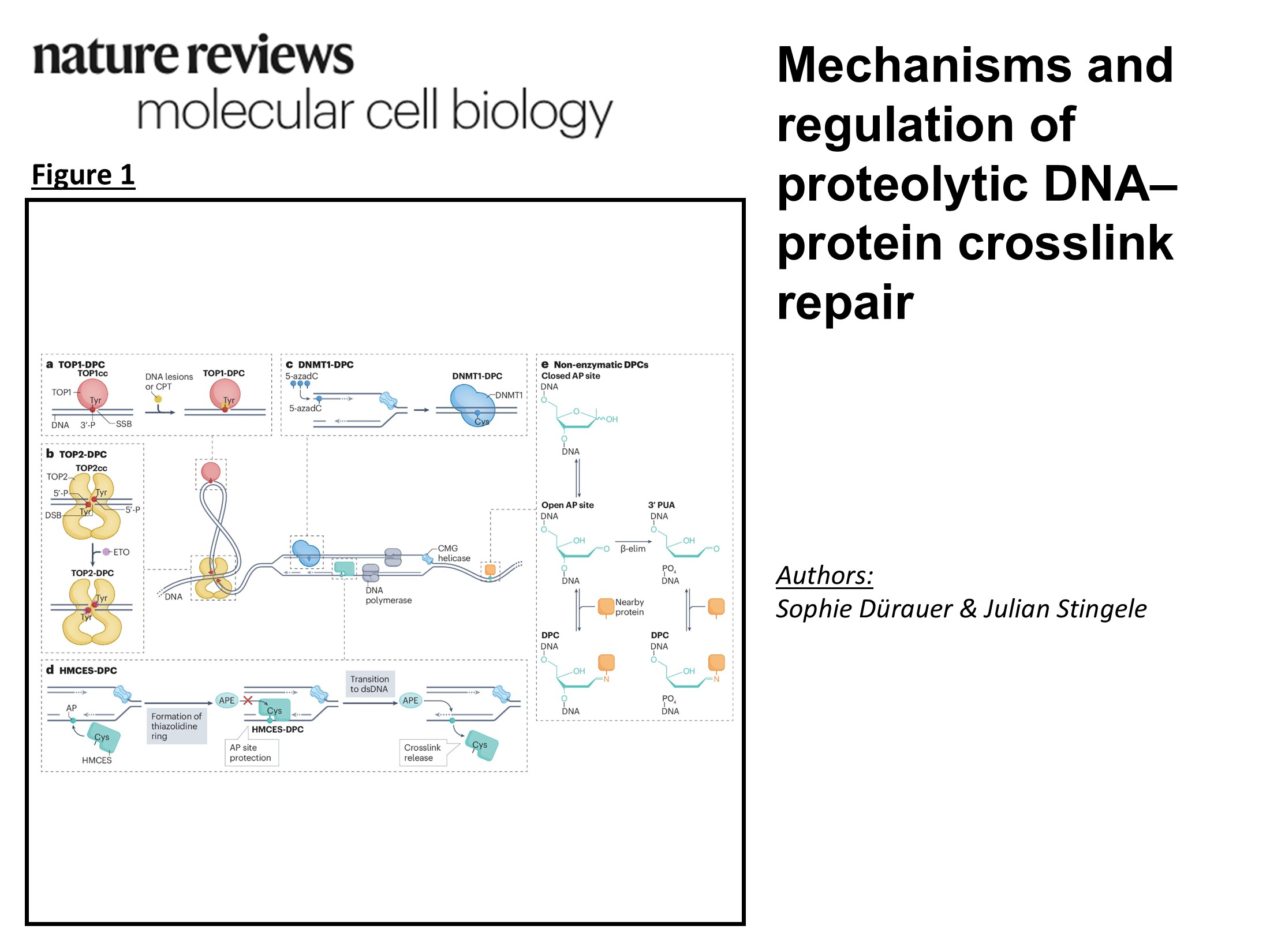
DNA–protein crosslinks (DPCs) are one of the most complex and deleterious forms of DNA damage. DPCs arise from the stabilization of covalent enzyme–DNA intermediates, such as topoisomerase cleavage complexes, or from exposure to bifunctional crosslinking agents, and they differ in protein identity, DNA context and chemical linkage. Because of their bulky nature, DPCs obstruct essential chromatin processes such as DNA replication and transcription, making their timely removal by dedicated DPC repair pathways crucial for genome stability and cellular homeostasis. In this Review, we discuss the origin and properties of the major classes of DPCs. We also describe key enzymes involved in DPC repair, with a particular focus on the proteasome and the specialized DPC protease SPRTN. Next, we synthesize recent advances in the understanding of proteolytic DPC repair across replication-coupled, transcription-coupled and global genome repair pathways and explain how these pathways converge on ubiquitylation of the crosslinked protein to license proteolysis by the proteasome or SPRTN. Finally, we discuss how defective DPC proteolysis contributes to genome instability, premature ageing and cancer predisposition.
Read the full paper here: https://www.nature.com/articles/s41580-026-01035-2